
Case Study: Building a Culture of Innovation with the vPCO Innovation Challenge
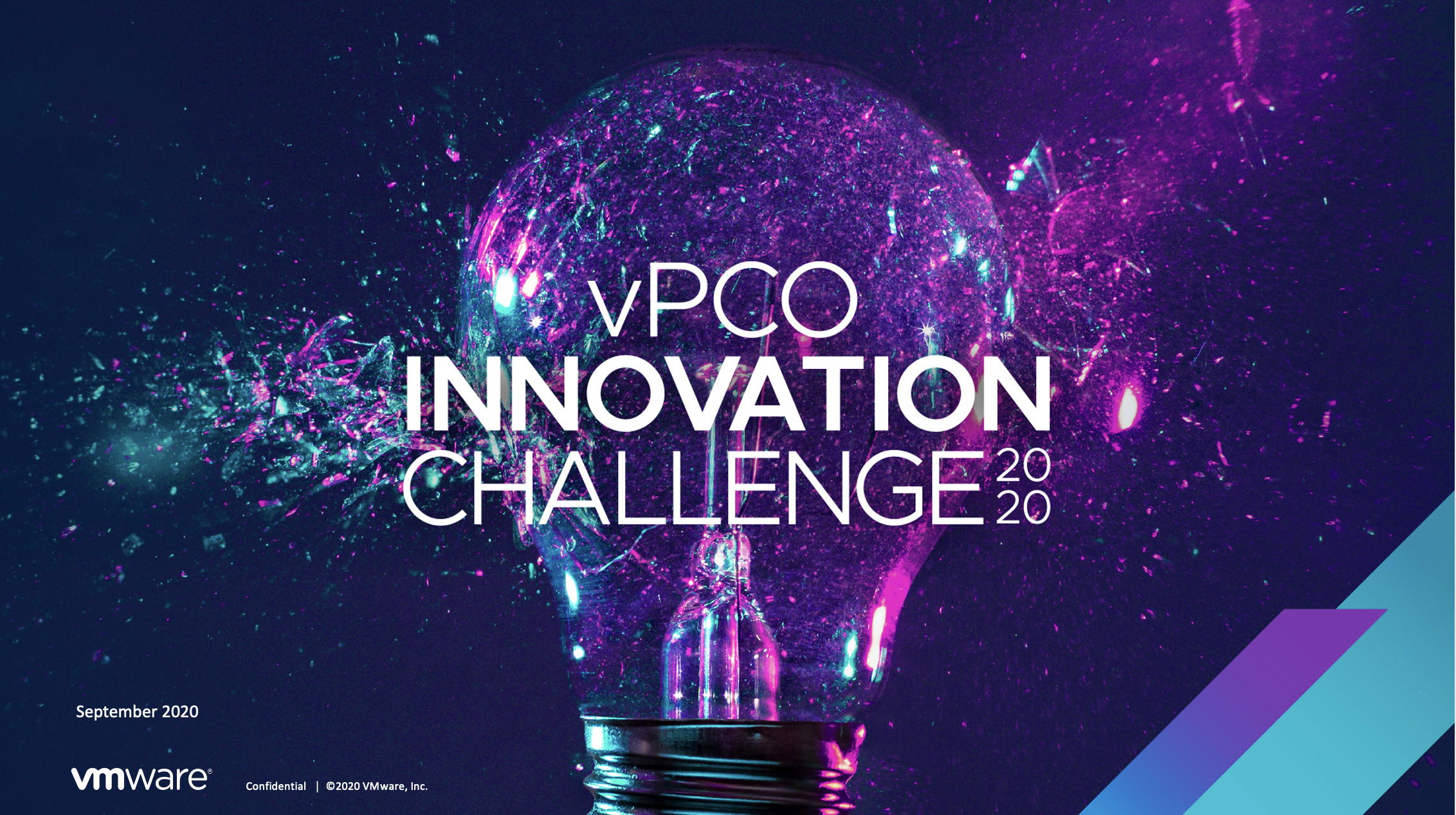
This case study explores how I developed and delivered a multi-phase internal communications campaign to support the vPCO Innovation Challenge at VMware.
Designed as a Shark Tank–style competition, the initiative aimed to democratise innovation, surface commercially viable ideas, and visibly position leadership as champions of invention. My role was to create a clear, engaging narrative that sustained momentum from shortlist to Grand Final—while reinforcing a broader culture shift toward open, accessible innovation.
Role: Copywriter (end-to-end internal campaign strategy and execution)and Project Management
Team: Senior leadership (including Uma Thana Balasingam), Board of Advisors, internal stakeholders, design support.
Project Duration: Multi-phase campaign aligned to competition lifecycle (Shortlisting → Voting → Grand Final) 2020 - 2021
The Challenge
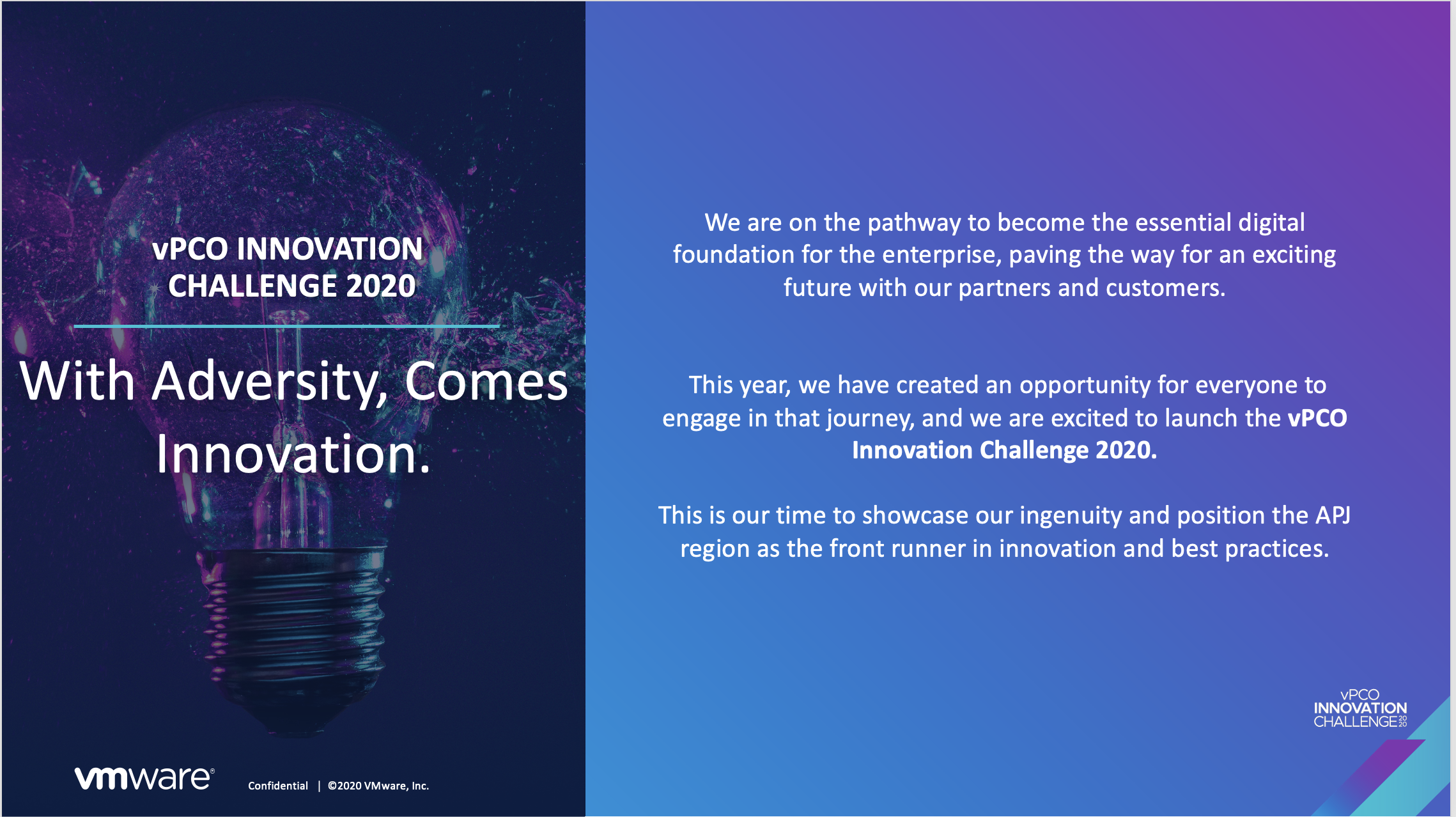
The vPCO Innovation Challenge wasn’t just another internal event — it was designed to show that innovation is everyone’s responsibility, not just leadership’s.
The aims were simple:
Encourage employees across Asia Pacific & Japan to put forward strong, commercially viable ideas
Move away from the traditional “run it up the chain” way of sharing ideas
Get colleagues involved through a live regional vote
Make sure everyone who took part — not just the finalists — felt recognised
Show leadership as supportive and involved, rather than removed from the process
From a communications perspective, the challenge was to create energy and a sense of friendly competition, while keeping the tone inclusive, respectful and clear at every stage.
Showing That Innovation Delivers Results
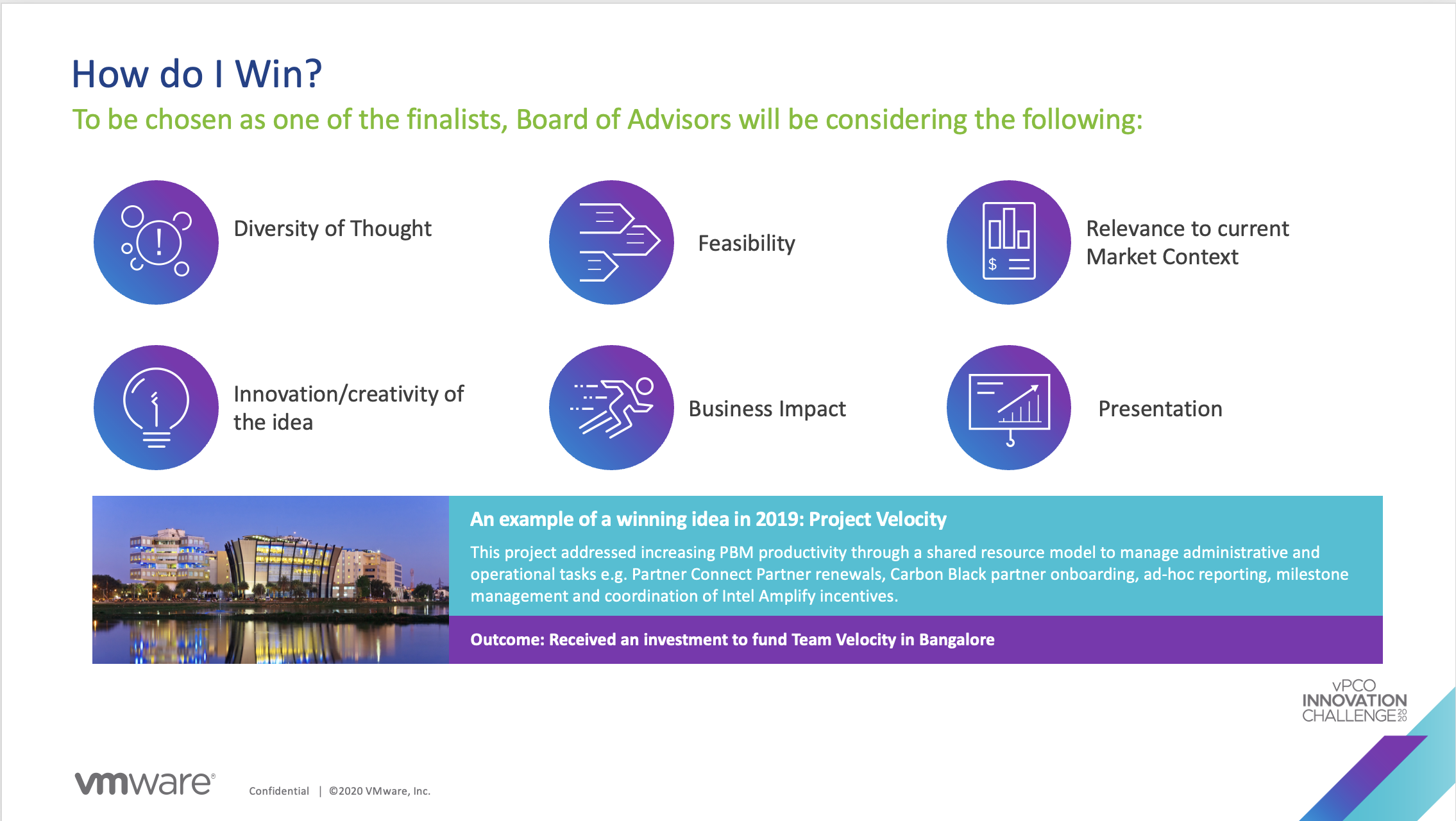
The initiative followed a clear direction already taking shape within VMware. The Shark Tank–style competition had delivered strong results, including:
A 216% increase in invention disclosure submissions
Nearly a 90% increase in patent applications approved for filing
These outcomes showed that when employees are given a direct, visible way to share ideas — without layers of approval slowing things down — participation increases and stronger ideas surface.
The vPCO Innovation Challenge built on this approach, aiming to make innovation open to everyone, easy to engage with, and clearly linked to real business impact.
Different Stages, Different Mindsets
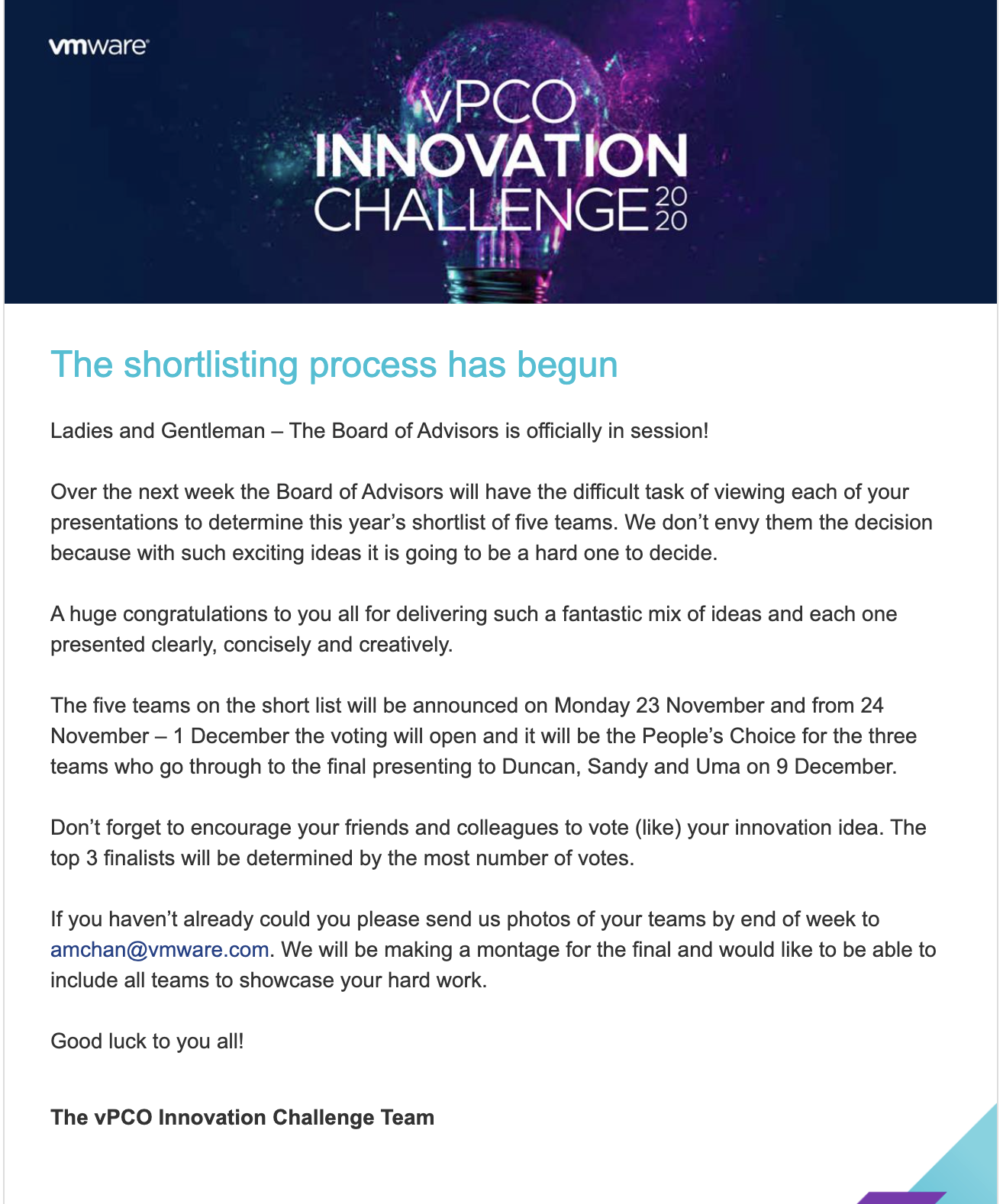
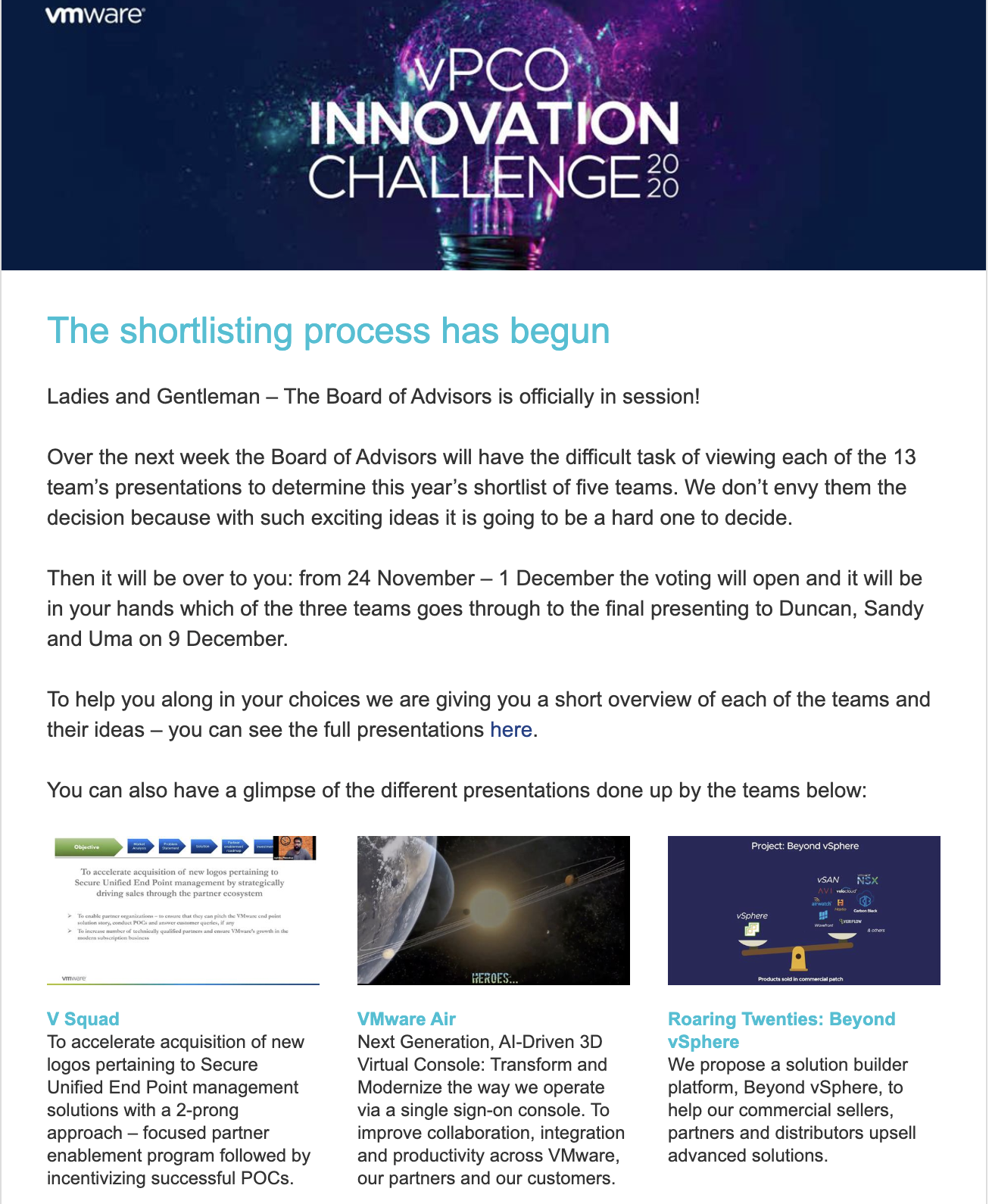
Shortlisting Phase – Building Momentum
At this stage, the focus was on keeping people informed and interested.
The messaging needed to:
Highlight the number and quality of submissions (13 teams)
Explain the role of the Board of Advisors
Clearly outline what would happen next and when
Create interest ahead of the public voting stage
Tone: Positive and confident, without overhyping it.
Objective: Show that the process was fair and well run, while keeping excitement building for the next stage.
Like any effective campaign, the narrative had to evolve across phases.
01.
02.
Voting Phase – Empowerment & Ownership
This stage shifted the focus to employees across the region.
Instead of simply watching the process, people now had a direct role in deciding which teams would move forward.
The messaging positioned voting as a genuine People’s Choice moment and announced the three finalists:
Roaring Twenties
Tech Titans
VMware Air
The tone became more celebratory and slightly competitive, encouraging people to attend the live Grand Final and take part in the final vote — with the added incentive that the winning idea would receive funding.
Tone: Energetic, inclusive and clear.
Objective: Encourage as many people as possible to get involved and support their colleagues.
03.
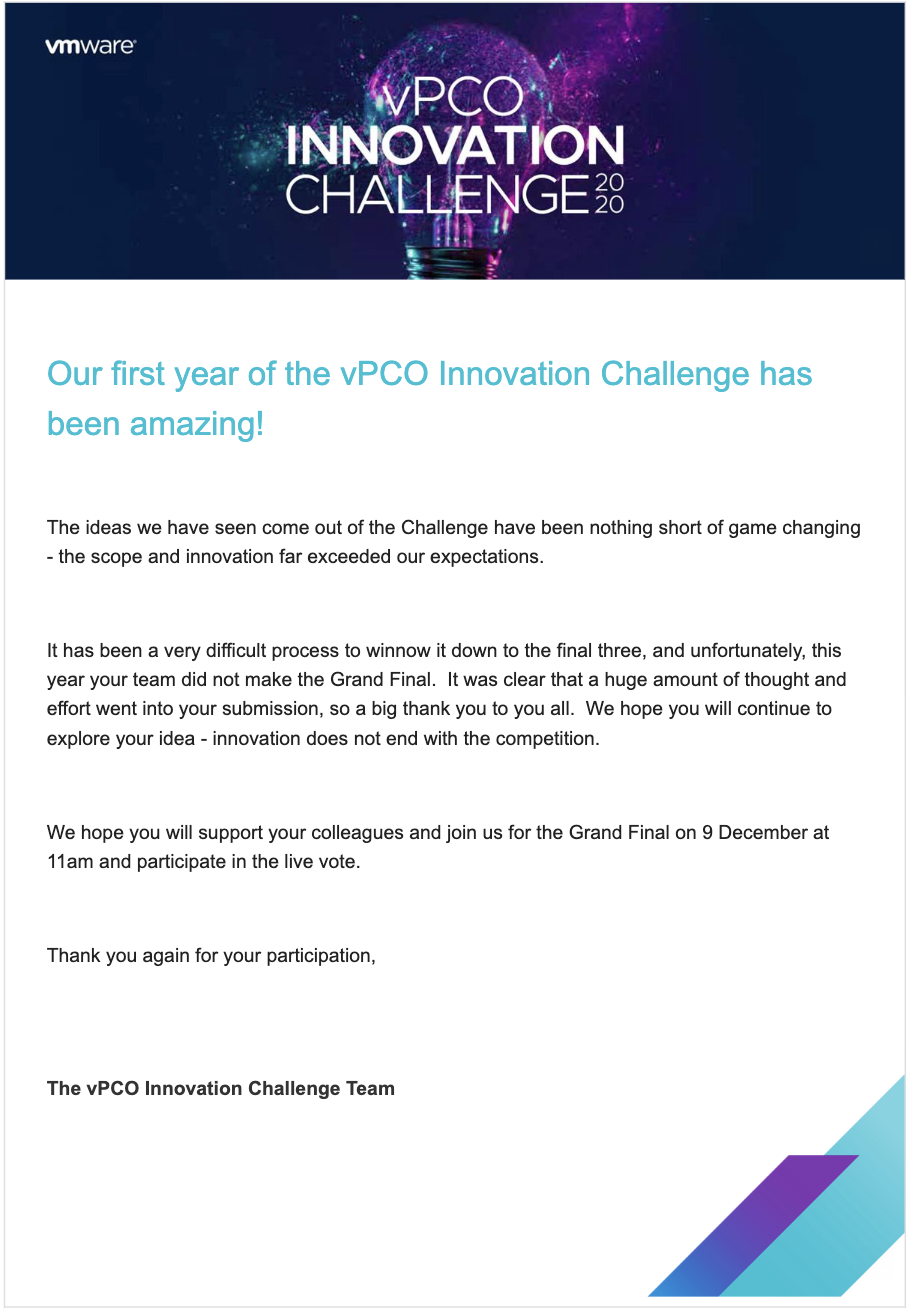
Finalist & Non-Finalist Communications – Celebrating Everyone
One of the more sensitive parts of the campaign was writing separate messages for finalists and non-finalists.
For finalists, the message was:
Congratulatory but practical
Clear about what they needed to prepare
Specific about presenting to senior leaders
Emphasising the opportunity for visibility and funding
For non-finalists, the message focused on:
Recognising the time, effort and creativity they had invested
Reinforcing that innovation doesn’t end with the competition
Encouraging them to attend the final and support their colleagues
Tone: Respectful, positive and encouraging.
Objective: The aim was to keep morale high and make it clear that taking part was just as important as winning.
Writing for a diverse region
Asia Pacific & Japan isn’t one single audience. The communication needed to work across different countries, cultures and working styles.
That meant:
Using clear, straightforward language that would translate well across the region
Being specific about dates, timelines and next steps
Respecting existing reporting structures while still encouraging open participation
Ensuring messages from senior leaders felt authentic and consistent
Beyond the wording itself, I kept the tone consistent across leadership-signed emails and internal HTML campaigns, so the story felt joined up from start to finish.
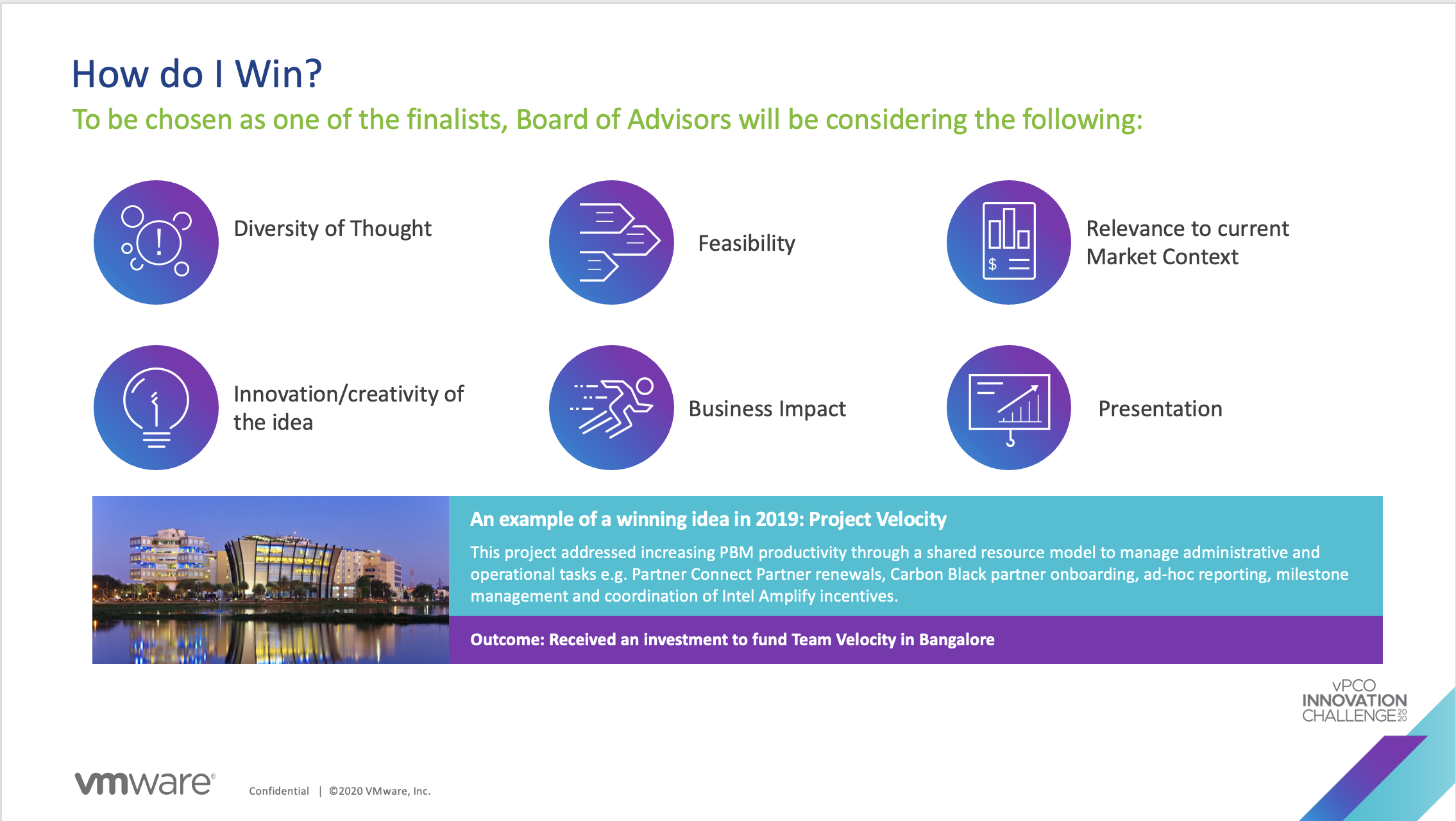
Doing the research
Effective internal communications require more than a brief.
Understanding:
Regional dynamics
Organisational hierarchy
Prior innovation barriers
The success of VMware IT’s invention program
allowed me to frame the Challenge not as a one-off event—but as part of a larger innovation movement within VMware.
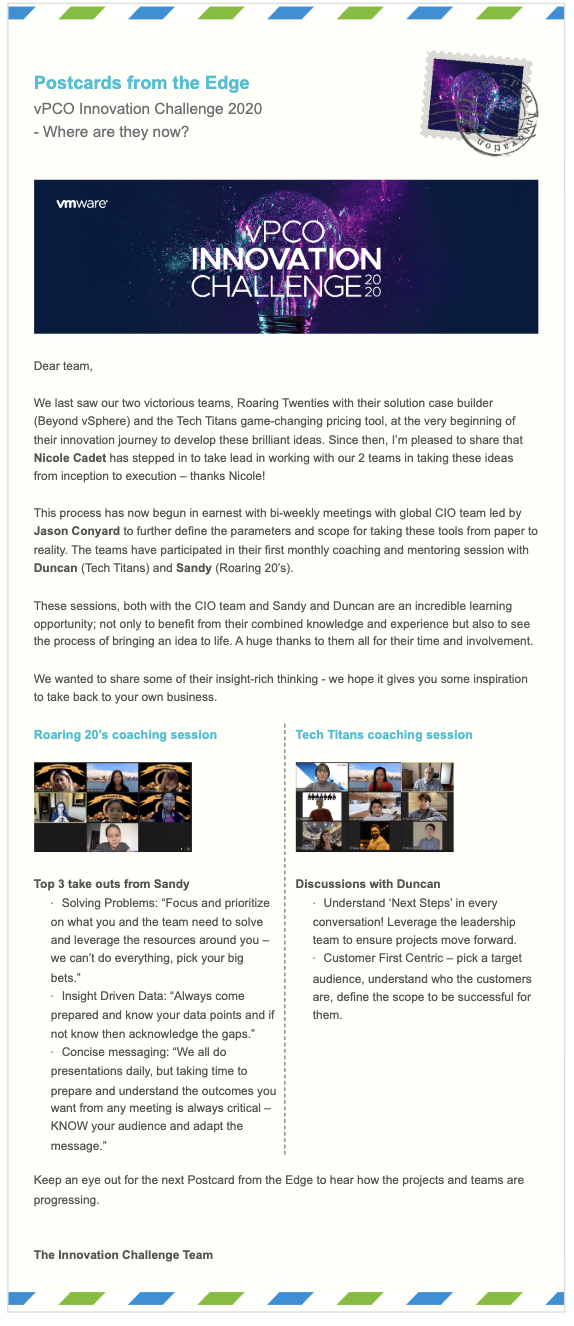
Impact
The campaign:
Kept people interested and involved over several weeks
Raised the profile of innovation across the APJ region
Made senior leaders feel more visible and approachable
Encouraged colleagues to support and vote for one another
Helped show that innovation is open to everyone and linked to real results
By connecting the Challenge to VMware IT’s proven 200%+ increase in invention submissions, the programme showed that innovation isn’t just a nice idea — it can lead to measurable business outcomes.
Final Thoughts
The vPCO Innovation Challenge shows how clear, consistent storytelling can turn an internal competition into something bigger.
By adjusting the tone at each stage — keeping it competitive but inclusive, energetic but grounded — the campaign reinforced a simple message:
Innovation isn’t just for R&D or senior leadership.
It can come from anyone — and everyone should have the chance to share it.